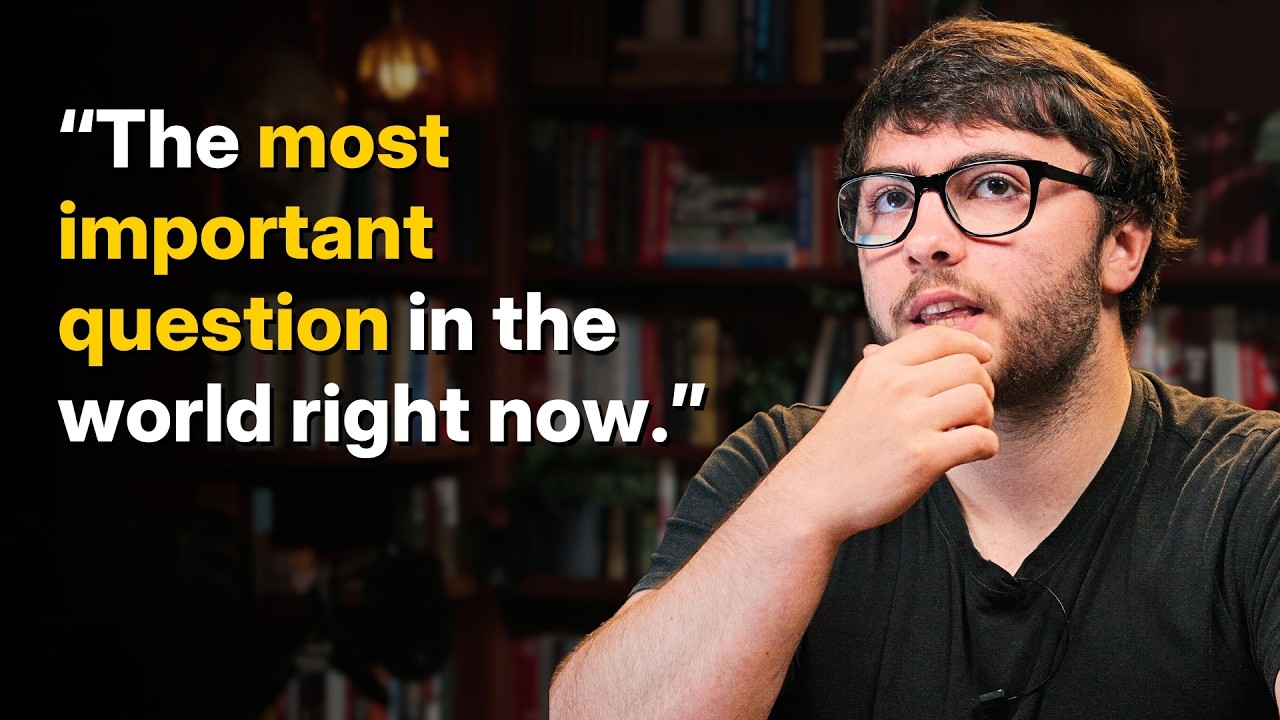
Dario Amodei opens the conversation by describing the psychological and operational reality of leading an AI company through exponential acceleration. Comparing the pace of progress to relativistic space travel, he emphasizes the necessity of rational, deliberate decision-making under intense pressure. He reflects on his departure from OpenAI, clarifying that while technical disagreements on safety exist across the industry, his exit was fundamentally driven by a breakdown in trust and concerns regarding honesty and shared values.
Addressing corporate strategy, Amodei explains why Anthropic prioritized enterprise products and coding tools like Claude Code and Claude Cowork over consumer engagement applications. He argues that ad-driven consumer models incentivize user addiction and low-quality content, whereas enterprise software aligns financial success with building reliable, secure, and genuinely useful tools. He addresses market fears surrounding software disintermediation ("SaaSpocalypse"), asserting that traditional software companies with deep customer relationships and specialized domain knowledge will survive if they adapt to AI integration.
On the topic of national security and ethics, Amodei defends Anthropic's decision to deploy models on classified U.S. military networks, contending that strong democratic state capabilities are essential to deter authoritarian powers like Russia and China. However, he distinguishes this support from blanket compliance, outlining strict red lines that forbid Anthropic models from being used for fully autonomous lethal targeting or domestic mass surveillance. He addresses controversies surrounding military strikes, maintaining that human accountability must remain mandatory in lethal decision-making.
Finally, Amodei discusses the breakthrough Mythos model, revealing that Anthropic chose not to release it publicly despite immense commercial downside because its autonomous cyber exploitation capabilities outpaced existing defensive safeguards. He calls for mandatory pre-release testing and government oversight, advocating for structural checks and balances between private AI labs and public institutions. While acknowledging a non-zero probability of catastrophic risk from AI scaling, Amodei rejects doomerism, arguing that active risk management can lead to transformative global advancements in medicine, science, and economic prosperity.