The Lens · OpenAI

OpenAI DevDay 2026 Keynote (FULL)

OpenAI54 min

14 min to the essentials of a 54 min video7 key momentsAdded today

The argument

OpenAI presents its vision for agentic AI, introducing personalized autonomous assistants ('Dots'), real-time collaborative workspaces ('ChatGPT Space'), high-speed and cost-effective frontier models (GPT-6.1 Sol and Ultrafast), and new cloud/developer infrastructure designed to transform AI into a persistent, high-agency partner for work and everyday life.

Essential viewing path

14 min of 54 min · 27% of the source

0:0053:35
Essential viewingLens momentChapter turn
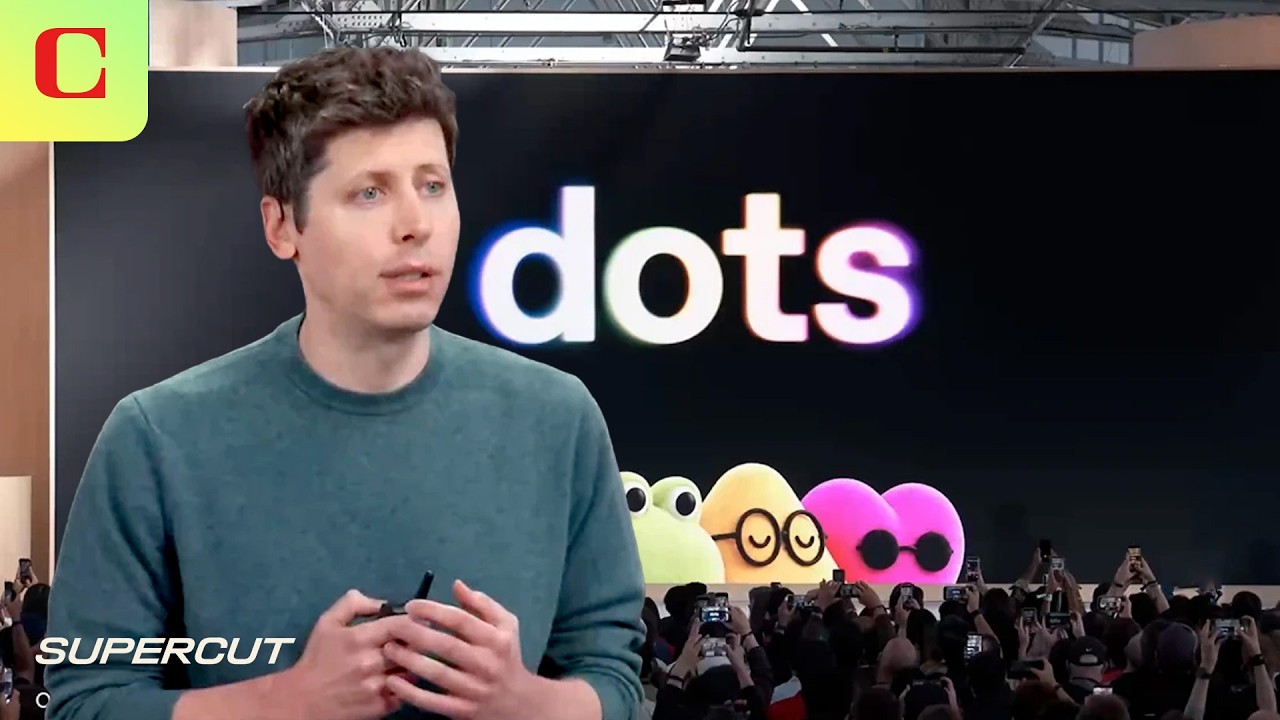
  1. 01Opening & Introducing Dots

    Crucial reveal of 'Dots', establishing the core product concept of persistent personal AI agents.

    2:10 – 4:40 · 3 min

  2. 02Product Demo: Dots and ChatGPT Space

    Shows how Dots operate in real time to build and deploy applications via multi-modal commands.

    10:50 – 13:20 · 3 min

  3. 03Frontier Models & Performance Upgrades

    Covers the key model announcements: GPT-6.1 Sol's 5x price reduction and Ultrafast's 300 token/sec speed.

    19:30 – 21:20 · 2 min

  4. 04AI Research Acceleration & Developer Infrastructure

    Presents empirical benchmark data showing AI agents handling 8-to-16-hour research tasks autonomously.

    26:10 – 28:10 · 2 min

  5. 05Live Developer Demos: Ultrafast, Cloud & Robotics

    Demonstrates Codex in the Cloud handling heavy asynchronous tasks like complete codebase rewrites off-device.

    40:20 – 42:40 · 2 min

  6. 06Ecosystem Distribution & Closing Vision

    Explains developer monetization and distribution mechanisms through Sign in with ChatGPT and OpenAI Marketplace.

    44:30 – 47:40 · 3 min

The Lens

7 moments that carry the argument

Each item is what a speaker said, paraphrased and placed in time. EchoLens records assertions; it does not adjudicate them.

ClaimSam Altman

OpenAI introduces 'Dots', personalized always-on AI agents designed to handle daily personal and professional tasks autonomously across applications.

Why it matters — Marks OpenAI's strategic shift from conversational chatbots to persistent, high-agency autonomous software partners.

01 · 2:26High confidenceFrom the source. Not independently verified by EchoLens.
InterpretationHolly Li

Holly Li demonstrates Dottie executing local code generation via Codex to build and deploy an iOS app update while receiving natural voice and text instructions.

Why it matters — Proves practical agent capability across multi-modal interfaces, local developer tooling, and mobile environments.

02 · 11:07High confidence
Numerical statementSam Altman

OpenAI launches GPT-6.1 Sol, offering near-Astra intelligence at one-fifth the price with a 95% discount on cached input pricing.

Why it matters — Significantly lowers the cost barrier for developers running high-volume, long-context agentic workloads.

03 · 19:41High confidenceFrom the source. Not independently verified by EchoLens.

You’re herethe moment this link points at

Numerical statementSam Altman

OpenAI introduces Ultrafast generation mode delivering up to 300 tokens per second, eight times faster than standard model speeds.

Why it matters — Enables near-instantaneous real-time interactions required for interactive 3D, voice, and immediate tool calling.

20:36 in the source
04 · 20:36High confidenceFrom the source. Not independently verified by EchoLens.
26:33Next key moment · Numerical statementTejal Patwardhan reveals that automated AI research agents increased their success rate on complex 8-to-16-hour research tasks from 10% in January to 35% in July.

Also on EchoLens

NewSource length 16:05

Also features Sam AltmanCNET

OpenAI Dev Day 2026: Everything Announced in 15 Minutes

Numerical statement9:07

GPT-6.1 Sol delivers near-Astra level intelligence at one-fifth the cost, offering a 95% discount on cached inputs ($0.10 vs $1.00 per million tokens).

— Sam Altman

6 key momentsAdded today

Numerical statementTejal Patwardhan

Tejal Patwardhan reveals that automated AI research agents increased their success rate on complex 8-to-16-hour research tasks from 10% in January to 35% in July.

Why it matters — Demonstrates rapid internal benchmark progress toward fully autonomous, multi-hour scientific research assistants.

05 · 26:33High confidenceFrom the source. Not independently verified by EchoLens.
ClaimRomain Huet

Romain Huet demonstrates Codex in the Cloud by instructing an agent to asynchronously rewrite an entire application backend in Rust without keeping local hardware open.

Why it matters — Shows how cloud-hosted agent execution frees developers from device-bound computation limits.

06 · 40:42High confidenceFrom the source. Not independently verified by EchoLens.
ClaimSam Altman

OpenAI launches 'Sign in with ChatGPT' and the OpenAI Marketplace, enabling developers to let users utilize their existing ChatGPT subscription tokens inside third-party apps.

Why it matters — Solves a major distribution and monetization friction point for third-party AI software builders.

07 · 44:40High confidenceFrom the source. Not independently verified by EchoLens.

Summary

At OpenAI DevDay 2026, CEO Sam Altman and the OpenAI product and research teams unveiled major updates centered on autonomous AI agents and developer infrastructure. Key product announcements include 'Dots'—always-on, personalized AI agents capable of operating across desktop, mobile, and third-party tools—and 'ChatGPT Space' for team-agent collaboration. OpenAI also introduced GPT-6.1 Sol for cost-efficient reasoning, Ultrafast generation reaching 300 tokens per second, Codex in the Cloud, the Decisions API, and enterprise distribution mechanisms like Sign in with ChatGPT and the OpenAI Marketplace.

Read the full analysis

The keynote opens with Sam Altman celebrating platform growth metrics, including over 1.2 billion weekly active ChatGPT users and 2.5 million business subscribers. Addressing top community feature requests, he highlights multi-folder Codex support, Linux compatibility, and mobile access before launching into the flagship theme of DevDay 2026: autonomous agentic AI.

OpenAI introduces 'Dots,' personalized, always-on AI agents that understand individual context, maintain persistent memory, and autonomously perform complex tasks ranging from daily administrative duties to engineering workflows. Holly Li demonstrates how a Dot ('Dottie') integrates into Slack, Google Meet, and local development environments to manage product rollouts, analyze feedback, and trigger local builds via Codex.

To facilitate team-wide collaboration with agents, OpenAI announces 'ChatGPT Space,' a persistent workspace featuring interactive 'Living Pages' where humans and multiple Dots co-create documents, code, and presentations. On the model frontier, Sam Altman introduces GPT-6.1 Sol, which delivers near-top-tier intelligence at one-fifth the price of Astra with a 95% discount on cached inputs, alongside 'Ultrafast' mode—an inference engine producing up to 300 tokens per second.

Research lead Tejal Patwardhan shares data demonstrating how OpenAI uses internal AI research interns to accelerate model training, showing that autonomous success rates on multi-hour tasks rose from 10% in January to 35% in July. The keynote concludes with developer tool announcements—including Codex in the Cloud, the Agents API with computer-use support, Codex Security Cloud, 'Sign in with ChatGPT' for third-party token reuse, and the OpenAI Marketplace—accompanied by live developer demonstrations from Romain Huet.
Chapters

  1. Opening & Introducing Dots

    Sam Altman reviews platform adoption metrics, highlights fulfilled developer requests, and introduces 'Dots'—personalized autonomous AI agents.

  2. Product Demo: Dots and ChatGPT Space

    Holly Li demonstrates Dots operating in real-world workflows across voice, messaging apps, and code generation, while Sam Altman introduces ChatGPT Space.

  3. Frontier Models & Performance Upgrades

    OpenAI announces GPT-6.1 Sol for affordable intelligence, Ultrafast mode reaching 300 tokens/second, new subscription tiers, and the Decisions API.

  4. AI Research Acceleration & Developer Infrastructure

    Tejal Patwardhan presents empirical results on AI automated research interns, followed by updates to cloud harnesses and the Agents API.

  5. Live Developer Demos: Ultrafast, Cloud & Robotics

    Romain Huet demonstrates real-time CLI generation, 3D world creation in browser, cloud backend rewrites, and hardware robotics integration.

  6. Ecosystem Distribution & Closing Vision

    Sam Altman unveils Sign in with ChatGPT, Plugin Extensions, and the OpenAI Marketplace, concluding with a vision of AI driving a human Renaissance.

Referenced in the source

2 of these appear in other Lenses — follow a name to see where.

Sam AltmanPerson2 Lenses
CEO of OpenAI who delivers the main keynote introductions, model announcements, and closing philosophical vision.
OpenAIOrganization9 Lenses
The AI research and deployment company hosting the DevDay event.
Holly LiPerson
Product manager at OpenAI who demonstrates Dots ('Dottie') managing daily workflows and app development.
Tejal PatwardhanPerson
Post-training research lead at OpenAI who presents data on AI research acceleration and computer-use safety.
Romain HuetPerson
Head of Developer Experience at OpenAI who conducts live technical demos of Ultrafast CLI, 3D world building, and micro-robotics.
DotsTechnology
Always-on, personalized autonomous AI agents introduced at DevDay 2026.
ChatGPT SpaceTechnology
A collaborative environment in ChatGPT featuring Living Pages where teams and Dots work together.
GPT-6.1 SolTechnology
A new frontier AI model offering high intelligence at 1/5th the cost of Astra with 95% cheaper input caching.
UltrafastTechnology
An ultra-low latency generation engine capable of serving up to 300 tokens per second.
Codex in the CloudTechnology
Cloud-hosted execution environment for Codex allowing long-running development tasks without local device dependency.
OpenAI MarketplaceTechnology
A distribution platform allowing developers to monetize plugins and enterprise software to OpenAI customers.
Was this Lens useful?
Report this content
Analyzed
analyzed September 30, 2026
Timestamps
timestamps validated
About this analysis
Model
gemini-3.6-flash
Media resolution
resolution low
Contract
prompt 1.1 / schema 1.1

Point EchoLens at something else

Paste another public YouTube link and get the same treatment: the argument, the claims, and the moments that matter.

Analyze another source

Continue exploring

Browse all Lenses →